


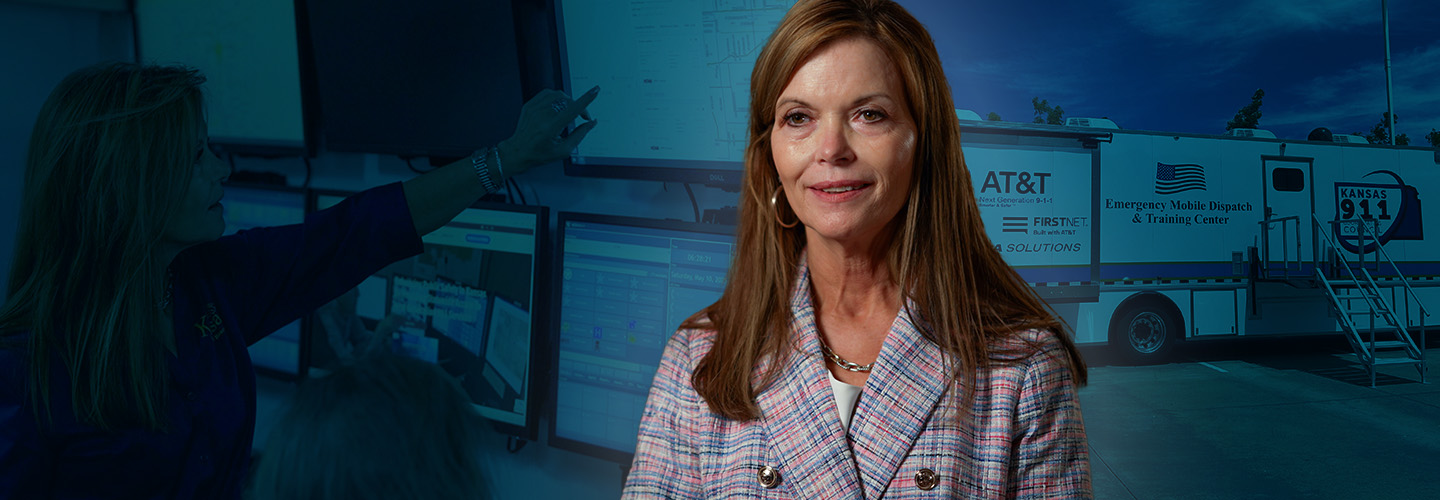
When a 9-1-1 call is made, emergency telecommunicators serve as the first line of response. Not only do they inform other public safety entities of where and what to respond to, they also often provide emergency medical dispatching and pre-arrival instructions, triage, and advice over the phone, guiding the caller through what could be the most challenging moment of their lives. They are the first first responders.
This is why training and staffing are so important for telecommunicators and emergency communication centers (ECCs). Every incident deserves the most effective and efficient response possible.
Social distancing sparks innovations in 9-1-1
When the COVID-19 pandemic struck in 2020 and social distancing and illness kept emergency telecommunicators at home, ECCs were faced with staff shortages and an uptick in emergency calls.
With so few telecommunicators on the floor, training took a backseat to daily operational support. Staff could not spend days traveling for training and leaving their teammates behind to answer and dispatch calls. Many ECCs were not equipped for that level of staff shortage, and training was skipped.
Michele Abbott, Communication Coordinator at the Kansas State 911 Board, knew the importance of training for emergency telecommunicators, and she looked at these challenges as an opportunity. If telecommunicators could not go to training, then the solution would be to bring training to the telecommunicators.
“It’s just like anything else — you train on what you know,” explained Abbott. “So, through time, features and functions were lost, and they weren’t trained on. We were trying to bridge that gap in bringing it to them.”
Bringing training to emergency telecommunicators
This need for training continued to grow over the years. In response, the Kansas State 911 Board developed and invested in a statewide Emergency Mobile Dispatch and Training Center (EMDTC). The high-tech mobile unit can be driven across the state to bring training to telecommunicators, effectively eliminating travel time for training.
The EMDTC is powered by FirstNet, the nationwide public safety broadband network. The Kansas State 911 Board had previous experience with the network, having integrated it as a tertiary backup system for the statewide dispatch system. With FirstNet in the EMDTC, the Board knew telecommunicators would experience a reliable connection while they trained — whether that was in the urban hubs of Dodge City and Wichita or the rural regions in Greeley and Wallace counties.
By bringing training to the telecommunicators, telecommunicators can remain situated at their local ECCs rather than losing days to travel. They are more available for normal operations assistance and can access training with ease in a simulated home call center environment.
“They log on and it’s just like they are experiencing their home environment,” Abbott said. “We can go anywhere in the state with it and connect to the correct host and use system selector to get our 9-1-1 lines up and running and we are good to go.”
Mobile dispatching aids emergency response in Kansas
In addition to training capabilities, the EMDTC is available to augment call center capabilities across the state. Up to five telecommunicators can sit in the EMDTC and answer overflow calls during emergencies, providing more staffing and faster service to the community in need.
“As technology continues to evolve for the 9-1-1 community, Kansas is really at the forefront of supporting our telecommunicators. Connecting through FirstNet ensures our support is always up and running,” Abbott noted.
Emergency telecommunicators are the first first responders for anyone who calls 9-1-1. Keeping ECCs staffed during everyday operations and major events is crucial to keeping our communities safe, and innovations like the ones created by the Kansas State 911 Board team allow for just that.